
Choosing between city and suburban life sounds like a lifestyle preference, but in reality, it’s a structural decision. It affects how you spend your time, how fast your career moves, how much you spend without noticing, and how mentally drained or relaxed you feel on a daily basis. Most people don’t think this through—they follow trends, family pressure, or what “feels right” at the moment. That usually backfires later.
Table of Contents
- Understanding What You Are Really Choosing
- How Your Hot Type Shapes Your Daily Life
- Space Versus Access Is A Trade-Off You Cannot Escape
- Career Growth Still Leans Heavily Towards Cities
- The Cost Difference Is More Complex Than It Looks
- Lifestyle Differences Go Deeper Than Entertainment
- Family Needs Change The Entire Equation
- Culture And Exposure Shape Long-Term Growth
- Investment Outlook Depends On Risk Appetite
- The Hybrid Model Is Becoming The Default
- Making The Right Decision For Yourself
- Final Thoughts
Understanding What You Are Really Choosing
This isn’t just about where you live; it’s about how your environment shapes your behavior. Cities operate on speed, density, and constant access. Suburbs operate on space, separation, and slower rhythms.
Urban areas are built to maximize convenience. For example, if somebody is buying a house in Gurgaon, they will naturally want to have access to all the luxury homes on a busy stretch like the Dwarka Expressway. Everything is closer, faster, and more interconnected. Suburbs, on the other hand, are built for comfort and distance from chaos. But that distance comes with trade-offs that people tend to underestimate until they experience them daily.
How Your Hot Type Shapes Your Daily Life
The type of home you choose ends up dictating your lifestyle more than you expect. In cities, you’re mostly dealing with apartments—compact, efficient, and designed around shared infrastructure. In suburbs, you’re more likely to get independent homes or larger units with private space.
But here’s where people get it wrong: they assume more space equals better living. It doesn’t. If your lifestyle doesn’t actually use that extra space, it becomes wasted cost and maintenance. At the same time, tight urban spaces can feel suffocating if you value privacy or quiet.
The smarter move is aligning your home with your actual daily habits, not an idealized version of life.
Space Versus Access Is A Trade-Off You Cannot Escape
You’re always trading something. Cities give you access but take away space. Suburbs give you space but take away access. There’s no perfect middle unless you’re willing to pay a premium.
People who move to suburbs for bigger homes often don’t account for the friction that comes with it. Everyday tasks become planned activities instead of quick decisions. Even something as simple as stepping out for a coffee or meeting a friend requires effort.
On the flip side, urban residents often overpay for convenience they don’t fully use. Plus, the floor plans and the use of living space need to be studied well. Living close to everything only matters if you actually take advantage of it.
Career Growth Still Leans Heavily Towards Cities
Despite all the talk about remote work, cities still dominate when it comes to career acceleration. Opportunities don’t just exist—they circulate. You hear about roles faster, meet people organically, and switch jobs more easily.
If you’re in a growth phase, being physically close to your industry still matters. Not always, but enough to make a difference over time. People in urban environments tend to move faster professionally, and that compounds over the years.
Suburban setups work better when your career is stable, predictable, or location-independent. Otherwise, you risk slowing yourself down without realizing it.
The Cost Difference Is More Complex Than It Looks
The biggest misconception is that suburban living is significantly cheaper. It’s only partially true. Yes, property prices are lower, sometimes dramatically. But overall cost isn’t just about what you pay for your house.
Cities are expensive upfront—rent, dining, lifestyle—but they save time and reduce logistical friction. Suburbs shift that cost into transportation, vehicle ownership, and time spent commuting.
In India, urban property prices can be almost double per square foot compared to suburban areas, but the total monthly difference often shrinks once you factor in commuting and hidden costs, and all the factors lead to property appreciation in the long term. So if you’re choosing suburbs purely to “save money,” you’re likely oversimplifying the math.
Lifestyle Differences Go Deeper Than Entertainment
Most comparisons reduce this to nightlife versus quiet evenings, which completely misses the point. The real difference is in how your days feel.
City life is stimulating. There’s always something happening, always somewhere to go. That can be energizing, but it can also become exhausting. You’re constantly exposed to noise, people, and activity.
Suburban life is controlled. You decide when to engage and when to disconnect. It’s calmer, more predictable, but also less dynamic. For some people, that feels peaceful. For others, it feels limiting.
Neither is better, it depends on what kind of mental environment you function best in.
Family Needs Change The Entire Equation
Once family becomes a factor, priorities shift, whether you like it or not. Space starts to matter more. Safety becomes non-negotiable. Schools, environment, and long-term stability take over.
Suburbs naturally align better with these needs. But that doesn’t mean every suburb works. Poor connectivity or weak infrastructure can make daily life frustrating, even if the home itself is great.
The smarter approach is choosing locations that balance space with access, not blindly picking one over the other.
Culture And Exposure Shape Long-Term Growth
One aspect people ignore is exposure. Cities offer diversity like different people, ideas, industries, and experiences. That exposure shapes how you think, how you communicate, and how you grow.
Suburbs offer stronger local communities but less variety. The environment is more stable but also less stimulating. This can either help you focus or slowly limit your perspective, depending on your personality.
If you’re early in your journey, exposure usually matters more than comfort. Later in life, the balance often shifts.
Investment Outlook Depends On Risk Appetite
From an investment standpoint, the decision becomes more strategic. City properties tend to be stable. They appreciate steadily, attract tenants easily, and carry lower risk.
Suburban properties are more speculative. They’re cheaper to enter but rely heavily on future development. If infrastructure improves, returns can be strong. If it doesn’t, growth stagnates.
So the real question is how much uncertainty you’re willing to tolerate.
The Hybrid Model Is Becoming The Default
What’s interesting in 2025 is that more people are no longer choosing strictly between the two. They’re combining both.
Living in a well-connected suburb while maintaining access to the city for work and social life is becoming common. It offers a balance, lower living costs, more space, and still enough exposure to opportunities.
But this only works if connectivity is actually reliable. Otherwise, you’re just adding stress through long commutes.
Making The Right Decision For Yourself
There’s no universal answer here, and that’s exactly why people get it wrong. They look for a “better option” instead of a better fit.
If your life is centered around growth, speed, and constant movement, cities make more sense. If you value stability, space, and a slower pace, suburbs will feel more aligned.
The mistake is choosing based on image or assumptions instead of your actual daily routine.
Final Thoughts
This decision isn’t about what sounds appealing; it’s about what holds up over time. Where you live quietly shapes your habits, your opportunities, and your overall quality of life.
If you get it right, everything feels smoother. If you get it wrong, the friction builds slowly, and you won’t even notice it until it starts affecting your energy, time, and progress.
So don’t treat this like a casual choice. It’s one of those decisions that looks small at first but compounds every single day.
Our Latest Blogs


Related Blogs
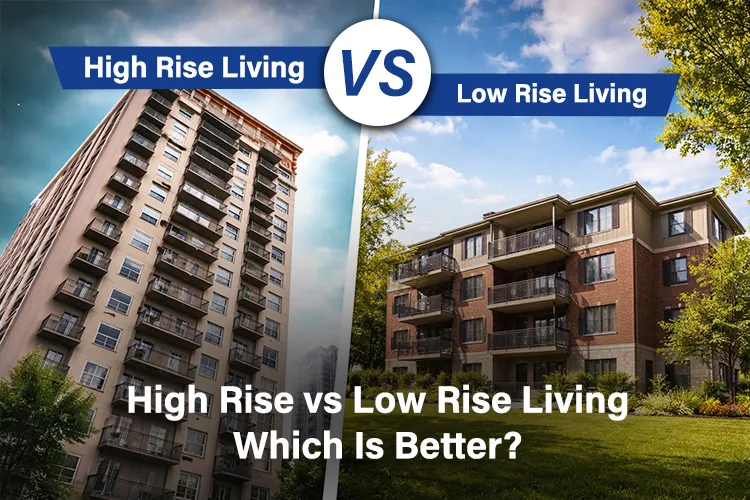
High Rise vs Low Rise Living: Which Is Better
Buying a home is never about just how big the house is or the price...
Read more
Why Families Are Choosing Godrej Astra for Better Urban Living
People nowadays want an upgrade in lifestyle. They are looking for something secure, that has...
Read more
Retail Shops vs SCO Plots: Which Is a Better Investment?
Investing in commercial real estate is one of the most effective ways to build long-term...
Read more
REITs vs Direct Property Investment: Which Offers Better Returns
There is a moment every investor reaches where the spreadsheets stop helping.One option promises flexibility,...
Read more
Leasehold vs Freehold Property: Which One Should You Choose?
Buying a house is often considered one of the biggest financial decisions a person makes....
Read more
The Clean Air Living Experience at Godrej Air Explained
Modern urban housing in Gurgaon is increasingly defined by two competing realities. On one side...
Read more
A Detailed Guide to Investing in M3M Urbana
Commercial real estate investment has evolved to a good extent over the last decade. Investors...
Read more
The Business Advantages of Owning Space at M3M Urbana
For decades, location has been considered the most important factor in commercial real estate. While...
Read more