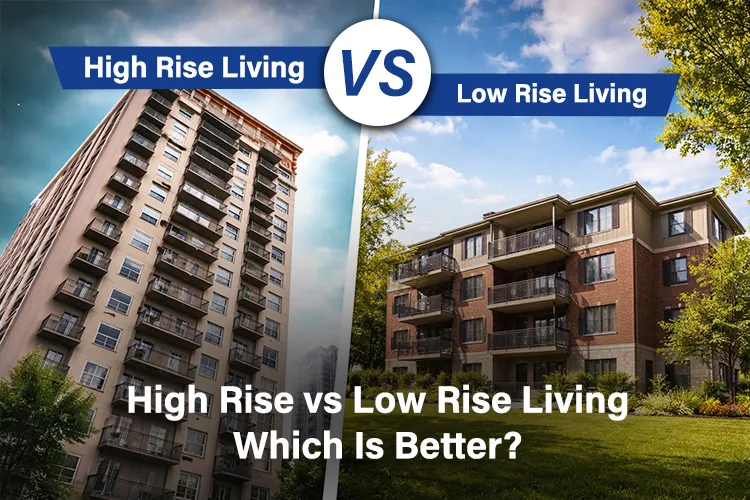
Buying a home is never about just how big the house is or the price tag attached to it. One of the decisions that quietly shapes your entire living experience is the type of building you choose to live in. In cities that are expanding at a great speed, projects that are residential today usually fall into two categories: high-rise buildings and developments that are low-rise.
Both options offer lifestyles that are very distinct. Some people prefer the views of the skyline and the amenities that come with buildings that are taller. On the other hand, others are drawn to the atmosphere of developments that are smaller. These are quieter and more focused on communities.
So the real question is not which one is better when we talk about things objectively. The question is, which one fits your lifestyle, priorities, and plans in the long term?
We will discuss all these and a lot more in this blog.
Understanding High-Rise and Low-Rise Living
Before comparing the two categories, it helps to understand what these two types of buildings actually imply.
High-rise buildings are typically residential towers that are very tall with many floors. You can see any of the top tallest buildings in Gurgaon. They often rise above ten or twelve stories. These developments are usually built in centers that are very urban and where land is limited. They make use of vertical space so that more people can live here comfortably. High-rise apartments are commonly associated with infrastructure that is very modern, lifts, systems designed for security, and amenities that help upgrade your lifestyle.
Low-rise buildings, on the other hand, are residential structures that are much smaller. They generally have floors that are fewer in number. They are usually found in neighborhoods that are quieter or in suburban areas. In these places, land can be accessed more easily. These developments tend to have fewer apartments and offer an environment of living that is a lot quieter.
While the difference may seem to be from an aspect of architecture, it significantly affects how people experience daily life in their homes.
Location and Connectivity
One of the differences that can be noticed very easily between high-rise and low-rise living is where these buildings are usually located.
High-rise projects are often developed in parts of the city or in the real estate sectors of the city that are developing very fast and are extremely busy. This is because they accommodate many residents within an area that is limited; they are frequently situated near hubs meant for commercial purposes, offices, centers for shopping, and routes where the public can travel easily. For professionals who want to reduce time for traveling and remain close to the activity of the city. This can be an advantage that is really major.
Low-rise developments are more common in quieter residential areas or areas that are just coming up. These neighborhoods may offer more open land, wider roads, and a slower pace of life. Families who prioritize calm surroundings, greenery, and less congestion often find these locations more appealing.
So the choice here usually depends on whether someone prefers convenience and proximity to the city center or a calmer living environment away from the crowd.
Views, Space, and Surroundings
Do you have any idea about one of the biggest wins when it comes to high-rise living? The views. Like, waking up to a skyline that is sweeping or city lights at night, that's just something else. For a lot of buyers, that alone makes it feel like a luxury experience every single morning.
That said, one simple thing to keep in mind is that high-rises are built to go up, not out. So sometimes the layouts can feel a bit more compact than you'd expect; it's just how the space gets divided when you're stacking floors.
Now, low-rise living, that's a whole different vibe. You know what's great about it? Because these buildings are spread out rather than up, you tend to get more room for breathing, floor plans that are bigger, and easier access to gardens or courtyards. The views might not blow your mind the same way, but honestly? The whole environment just feels more laid-back and open, and for a lot of people, that's exactly what they're looking for when they are looking to invest in Gurgaon.
Amenities and Lifestyle Features
Now let’s talk about the amenities in high-rise developments that are very modern. You know what? They really go all out when it comes to facilities. We're talking pools where residents can go for a swim, gyms, lounges on the rooftop, courts where the residents can engage in sports, and clubhouses. You can imagine it's the whole package, right there within your complex. One simple thing to appreciate is that it's all designed so you genuinely don't need to step outside for purposes related to recreation. It's like a little world of its own.
Low-rise developments, on the other hand, keep things really, really straightforward. You know what this means: it's more about comfortable living that is simple rather than packing in every amenity that one can think of. You might get a small park, a designated trail for walking, or maybe a space where the community can celebrate on special occasions. However, it's not going to match the scale of what a high-rise tower offers. And honestly? For some people, that's perfectly fine.
Maintenance and Security
Tall residential towers tend to run like well-oiled machines. Crews for maintaining the property who are extremely dedicated handle everything from cleaning the lobbies to fixing a pipe that is leaky, and security is taken seriously. You can think of CCTV on every floor, controlled entry points, and guards who actually know the building.
Shorter, low-rise buildings are a different story. The infrastructure is simpler, and so is the way the property is managed. Sometimes it's just a small committee, or honestly, whoever among the residents is willing to step up. Maintenance doesn't demand the same scale of operation, but it does demand a bit more involvement on a very personal level.
And for a lot of people, that's exactly the appeal. There's something really, really nice about living somewhere small enough that you actually know your neighbors. A place where you're not just a flat number in a long corridor but a face that is known well. Low-rise communities have a warmth to them that no amount of professional management can mimic.
Noise and Privacy
One simple thing about high-rise living that people don't always think about upfront is that you're essentially sharing a building with hundreds of other residents. Now, inside your own apartment, it can be perfectly quiet. But the moment you step out? The elevators, the parking, and the amenities that are shared can get pretty busy, especially during peak hours. It's just part and parcel of living in a complex that is very large.
Low-rise developments just naturally have a different feel to them. Families that are fewer in number have less foot traffic and less of that constant coming and going. It all adds up to a more peaceful atmosphere that one can notice extremely easily. And one simple thing that comes with that is a greater sense of privacy that is generally found in premium residential apartments in Gurgaon. This, honestly, a lot of people don't realize they're missing until they actually experience it.
So if coming home to an environment that is very calm is something that really matters to you, this is definitely a factor that can help you in making your decision.
Final Thoughts: Which Option Is Right for You?
At the end of the day, you know what, it really just comes down to what matters most to you.
If you're someone who loves the buzz that life in a city offers, enjoys having amenities that are extremely modern right at your doorstep, and feeds off that urban energy, high-rise living is probably right up your alley. One simple thing is if convenience, security that is solid, and a complex that offers an amazing lifestyle are things you genuinely value, then a high-rise just ticks a lot of those boxes naturally.
Low-rise living, on the other hand, speaks to a completely different kind of person. These buildings are for someone who'd rather have peace and quiet, a bit more space, and that warm sense of actually knowing their neighbors. Families, retirees, and people who just want to come home to an environment that is calmer are best suited for these.
Neither one is better than the other; they're just extremely different from each other. It's really about figuring out what kind of life you want to live day to day and then choosing the one that fits that picture.
Our Latest Blogs


Related Blogs
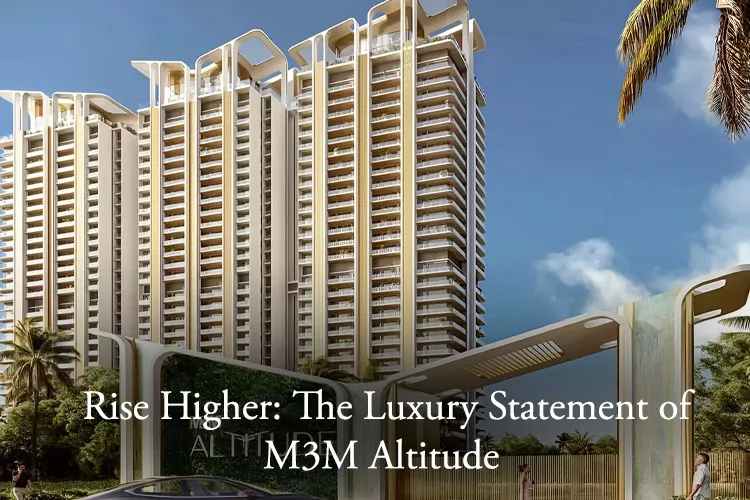
Rise Higher: The Luxury Statement of M3M Altitude
Luxury real estate in Gurgaon has started to look repetitive. Everywhere you hear the same...
Read more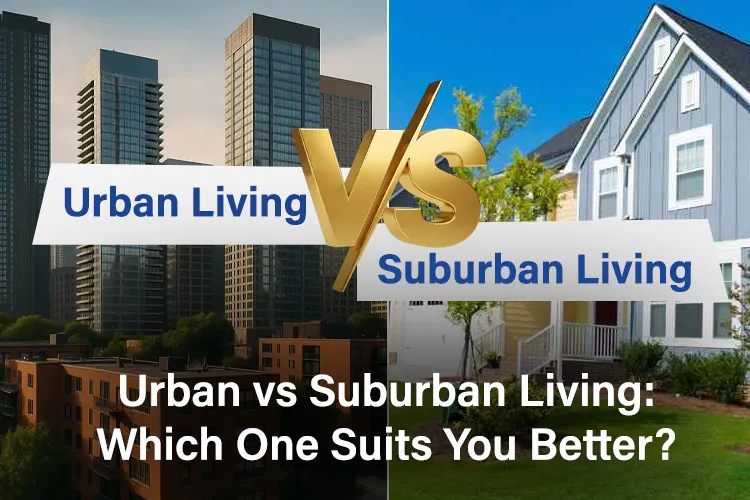
Urban Vs Suburban Living: Which One Actually Suits You Better?
Choosing between city and suburban life sounds like a lifestyle preference, but in reality, it’s...
Read more
Retail Shops vs SCO Plots: Which Is a Better Investment?
Investing in commercial real estate is one of the most effective ways to build long-term...
Read more
REITs vs Direct Property Investment: Which Offers Better Returns
There is a moment every investor reaches where the spreadsheets stop helping.One option promises flexibility,...
Read more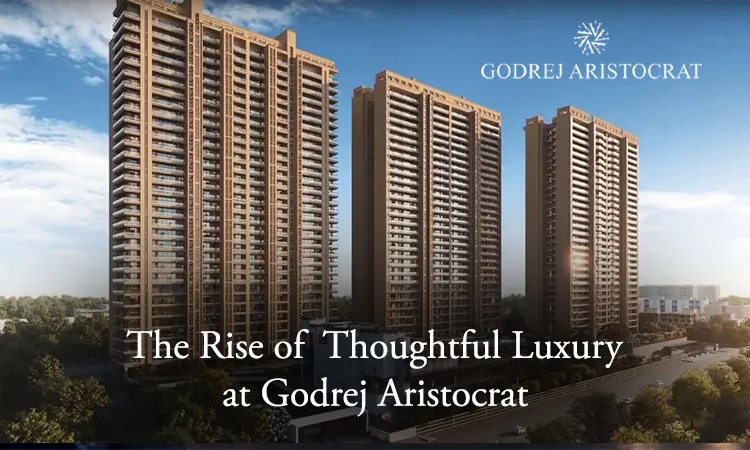
The Rise of Thoughtful Luxury at Godrej Aristocrat in Gurgaon
Luxury housing in Gurgaon is changing fast. Buyers are no longer impressed only by massive...
Read more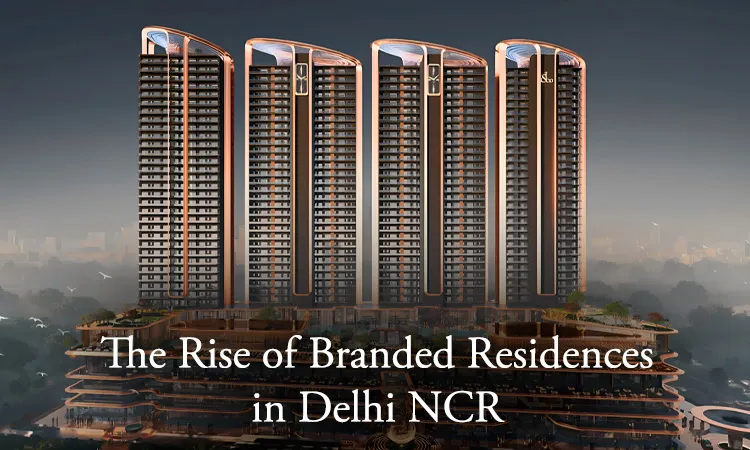
The Rise of Branded Residences in Delhi NCR
Branded residences are no longer just a trend; they’re becoming a definition that is very...
Read more
M3M Altitude: High Returns at a Higher Standard of Living
When we talk about luxury in Gurgaon, it is no longer about just bigger apartments;...
Read more
What Makes Emaar India Business Centre Ideal for Modern Enterprises?
The conversation around office spaces has changed. Companies are no longer just looking for square...
Read more