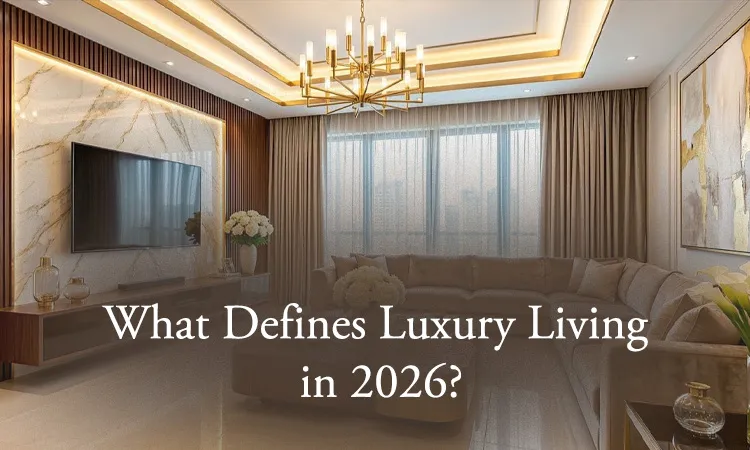
For years, luxury real estate was easy to define: bigger homes, locations that are better, and prices that are higher. That definition is outdated now. By 2026, luxury is no longer about how much space you own but how intelligently that space works for you.
A 5,000 sq. ft. apartment that feels inefficient, noisy, or disconnected from daily life is no longer considered luxury. Buyers today are far more aware, more exposed globally, and far less impressed by superficial upgrades.
Luxury has shifted from display to experience.
Table of Contents
- Lifestyle Integration Is Becoming The Core Of Luxury
- Technology Is Moving From Smart To Predictive
- Privacy And Low Density Are Now True Status Symbols
- Location Strategy Is Shifting Toward Future Corridors
- Design Language Is Becoming More Subtle And Global
- Sustainability Is No Longer Optional
- Luxury Is Becoming End-User Driven, Not Investor-Driven
- Returns Still Matter, But They Are More Realistic
- What Luxury Living Will Actually Mean In 2026
- Final Word
Lifestyle Integration Is Becoming The Core Of Luxury
The biggest shift is happening at the lifestyle level. Homes are no longer designed just for weekends or social gatherings; they are built around everyday living.
People are working from home, prioritizing health, and spending more time indoors than ever before. That changes everything.
A luxury home in 2026 is expected to include quiet workspaces, private outdoor areas, wellness-focused zones, and layouts that allow separation between work, rest, and social spaces. The idea is simple: your home should reduce friction in your daily life, not add to it.
This is why the increase in branded residences in NCR today is because of how people actually live, not how brochures want them to live.
Technology Is Moving From Smart To Predictive
The term “smart home” has been overused, but in 2026, it finally starts to mean something real.
Automation is no longer limited to controlling lights through an app. Homes are becoming responsive environments. Temperature adjusts based on usage patterns. Security systems learn behavior. Energy consumption is optimized without manual input.
The modern buyer compares homes the same way they compare technology, performance, efficiency, and future-readiness. They check whether proptech-driven smart homes in Gurgaon are worth considering or not.
If a 5 to 10 Cr home feels technologically outdated, it immediately loses appeal.
Privacy And Low Density Are Now True Status Symbols
Earlier, luxury meant access, big clubhouses, crowded social spaces, and large-scale developments.
Now, luxury means controlled access.
Buyers are actively choosing low-density projects where fewer people share the same space. Private elevators, limited units per floor, and restricted access zones are no longer bonuses; they are expectations.
This shift is psychological as much as practical. Privacy has become a form of wealth expression. Not being surrounded by too many people is, ironically, the new definition of exclusivity.
Location Strategy Is Shifting Toward Future Corridors
Traditional prime areas like Golf Course Road still hold value, but the real movement is happening in emerging corridors.
Luxury buyers are no longer just paying for an address. They are investing in infrastructure-backed growth. Areas connected by expressways, upcoming metro lines, and commercial hubs are becoming more attractive because these areas have more high returns than legacy locations that have already peaked.
In Gurgaon, stretches like Southern Peripheral Road and Dwarka Expressway are seeing this shift clearly. The logic is simple: better planning, newer developments, and stronger long-term appreciation potential.
Luxury is becoming forward-looking, not backward-looking.
Design Language Is Becoming More Subtle And Global
One of the most noticeable changes in luxury homes is visual.
Heavy, ornamental interiors are being replaced by cleaner, more minimal designs. The influence is clearly global, European simplicity mixed with East Asian functionality.
Buyers now prefer natural textures, neutral tones, larger windows, and layouts that feel open but purposeful. The goal is not to impress guests for a few hours but to create a space that feels calm and livable every single day.
This shift shows maturity in buyer taste. Loud luxury is being replaced by quiet confidence.
Sustainability Is No Longer Optional
A few years ago, sustainability was a marketing angle. In 2026, it becomes a decision-making factor.
Buyers are asking direct questions about water management, energy efficiency, and long-term environmental impact. Features like rainwater harvesting, solar integration, and EV charging are no longer premium add-ons; they are expected.
This is not just about environmental awareness. It’s also about cost efficiency and long-term viability. A sustainable home is simply more practical to run.
Luxury Is Becoming End-User Driven, Not Investor-Driven
Another major shift is in who is buying.
Earlier, luxury markets were dominated by investors looking for capital appreciation. That’s changing. The majority of buyers today are end-users, people who actually plan to live in these homes.
This changes the entire equation.
End-users care about layout, usability, maintenance, and long-term comfort. They are less influenced by hype and more focused on real value. This is forcing developers to improve quality, planning, and execution.
The market is becoming more rational, and that’s a good thing.
Returns Still Matter, But They Are More Realistic
Let’s not ignore the financial side. Luxury real estate is still an investment, but expectations have become more grounded.
Buyers are no longer chasing unrealistic appreciation. Instead, they are looking for steady value growth backed by infrastructure and demand. Rental yields in the luxury segment are also improving, driven by senior professionals, NRIs, and expatriates.
This creates a dual advantage, capital appreciation over time combined with stable rental income.
For those comparing office vs. retail investment, luxury residential is now entering the conversation as a more balanced, long-term asset class.
What Luxury Living Will Actually Mean In 2026
If you strip everything down, luxury in 2026 stands on a few clear principles.
- It is about how well a home supports your daily life.
- It is about privacy, not crowd density.
- It is about intelligent design, not excessive decoration.
- It is about future readiness, not just present appeal.
- And most importantly, it is about long-term value, not short-term hype.
Luxury doesn’t need to prove itself loudly anymore. It simply needs to work better than everything else around it.
Final Word
Luxury living in 2026 is becoming more honest. Buyers are smarter, expectations are higher, and the market is less forgiving.
Projects that rely only on branding or surface-level features will struggle. Those that focus on design, functionality, and real-world usability will stand out.
The definition of luxury hasn’t disappeared, it has just become harder to fake.
Our Latest Blogs


Related Blogs

What Defines Ultra-Luxury Living at Trump Tower Gurgaon
Ultra-luxury living is no longer just about living in huge apartments. It's about privacy, standards...
Read more
Luxury Projects in Gurgaon for Investment in 2026
Let’s be honest for a second. Not every “luxury project” in Gurgaon is actually worth...
Read more
Tonino Lamborghini Residences: Speed Meets Luxury Living
Luxury has always borrowed inspiration from different worlds. Fashion influences interiors, hospitality shapes residential experiences,...
Read more
The Rise of Thoughtful Luxury at Godrej Aristocrat in Gurgaon
Luxury housing in Gurgaon is changing fast. Buyers are no longer impressed only by massive...
Read more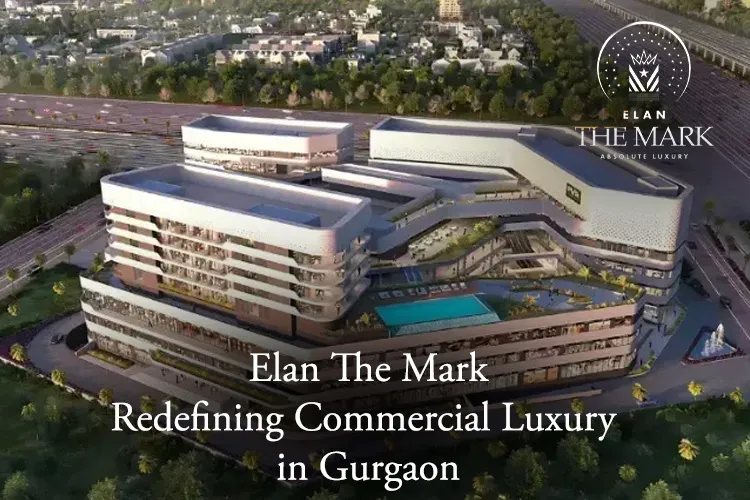
Elan The Mark: Redefining Commercial Luxury in Gurgaon
Gurgaon is no longer just a story of growth in the residential sense. Over the...
Read more
Sobha Crescent: A Complete Guide to Premium Living in Gurgaon
When you look at the real estate market in Gurgaon today, you will notice one...
Read more
Gurgaon vs Noida : Where Should You Invest in 2026?
There comes a point where scrolling through listings and watching videos on properties stops being...
Read more
Ready-to-Move vs Under-Construction in Gurgaon: What to Choose?
There are broadly two types of property buyers in Gurgaon. There are those who value...
Read more