Real estate has always been one of the most trusted ways people can build wealth. While stocks can crash overnight and crypto can swing wildly, investments in terms of property tend to offer something most investors value deeply. And that is the stability backed by an asset that is physical. Whether it’s an apartment that is meant for residential purposes, a commercial office, or a vacation home. For this reason, real estate gives investors the confidence that their money is tied to something that is tangible.
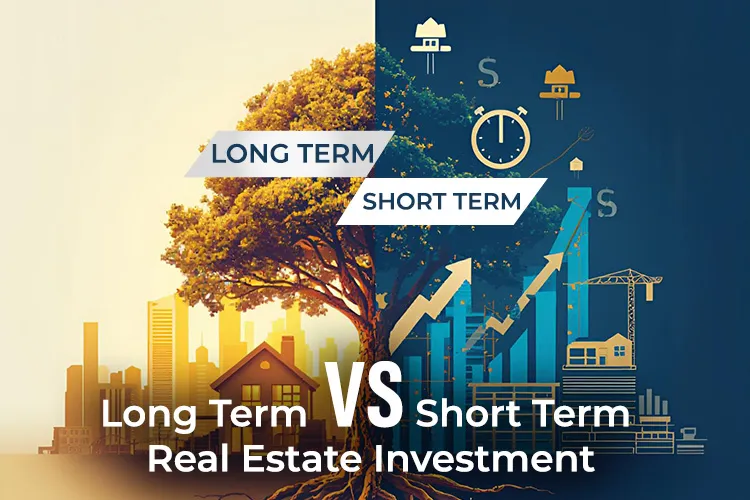
But here’s where things often get confusing for people who are beginning to invest. When people decide to enter the real estate market, one of the first questions they face is whether they should go for short-term investments or long-term investments. Both strategies exist for a reason, and both can give profit. However, they serve very different purposes.
The approach that is correct depends on where you stand from a financial perspective, how much risk you can take, your investment horizon, and how actively you want to manage how much you can invest.
Let’s break this down in a simple, practical way. And the purpose of this is so that you can understand which path makes more sense for you.
Why Real Estate Is Still a Powerful Investment Option
Before diving into strategies for investment, it’s important to understand why real estate remains such a class of asset that is very popular.
Unlike many investments in finance, property offers multiple ways to generate returns. Investors can benefit from appreciation in capital, income from rents, a rise in appreciation due to infrastructure development, advantages in terms of tax, and how they can diversify their portfolio. This means real estate doesn’t rely on just one income stream.
Another major advantage is how stable the asset is. Values in terms of property generally grow over time, especially in areas that are developing very fast. Cities expanding due to infrastructure development, corporate growth, and population migration often see steady appreciation in real estate prices.
This combination of stability and growth potential makes real estate attractive for both conservative and aggressive investors.
Understanding Short-Term Real Estate Investments
Short-term real estate investing focuses on earning profits within a relatively short period, usually within a year or a few years. These strategies are typically more active and involve higher risk compared to long-term investments.
However, the potential returns can also be significantly higher if executed correctly.
Short-term investors usually look for opportunities where property value can increase quickly or where short-term cash flow can generate fast profits.
Property Flipping
One of the most common strategies for the short term is buying properties that are undervalued, renovating them, and selling them in a way that you can earn a profit.
Investors identify homes that need improvements, purchase them at a price that is lower, upgrade the interiors or structure, and then sell the property at a market value that is much higher.
This strategy can generate profits that are substantial. However, this thing requires strong market knowledge. If renovation costs go over budget or the property takes too long to sell, the profit that is unrealized can shrink quickly.
Short-Term Rental Properties
Platforms like Airbnb have changed the way people look at rental income.
Instead of leasing a property for several years, some investors choose to rent homes on a daily or weekly basis, especially in tourist-heavy locations. Vacation homes, city-center apartments, and properties near business hubs often perform well in this category.
Short-term rentals can generate higher monthly income compared to traditional rentals, but they also require active management, maintenance, and consistent occupancy.
Real Estate Wholesaling
Wholesaling is another interesting strategy where investors do not actually purchase the property.
Instead, they identify distressed or undervalued properties. Once having done that, they secure them under a purchase contract and then assign that contract to another buyer for a fee. Essentially, the investor acts as a middleman who connects people selling the property with buyers.
This method requires strong skills when it comes to networking and awareness of the market, but involves relatively low capital.
Peer-to-Peer Real Estate Lending
Some investors prefer an approach that is very financial rather than buying property that is physical. Through peer-to-peer lending platforms, investors fund developments in real estate or renovation projects and earn interest on the money they lend.
These investments are typically short-term and provide regular returns as borrowers repay their loans.
However, the level of risk depends heavily on how credible the borrower is and the platform involved.
The Risks Behind Short-Term Investing
While strategies for a very short period of time can deliver quick profits, they also come with uncertainty that is much more.
Fluctuations in unexpected repair costs, property demand changes, and economic slowdowns can affect all returns. Since these investments rely heavily on timing, even small market shifts can impact profitability.
For investors who prefer predictable growth and lower volatility, long-term strategies often feel more comfortable. They should also be very aware of whether they want to invest in commercial or residential real estate.
The Concept of Long-Term Real Estate Investing
Long-term real estate investments usually involve holding a property for several years or even decades. Instead of chasing profits that you can get very quickly, the focus here is on appreciation that is steady and income that is consistent.
This approach is widely considered the more stable path because real estate historically increases in value over longer periods.
Long-term investors benefit from both property price growth and rental income, which together create sustainable wealth.
Rental Properties
Traditional rental investments remain one of the most reliable ways to earn passive income.
Investors purchase residential or commercial properties and lease them to tenants for extended periods. The monthly rental payments generate consistent cash flow while the property continues to appreciate over time.
Cities with growing job markets and strong infrastructure development often offer the best long-term rental opportunities.
Real Estate Investment Trusts (REITs)
Not everyone wants the responsibility of managing physical property.
This is where REITs become an attractive option. These companies own and manage income-generating properties such as malls, office buildings, hotels, and warehouses.
Investors buy shares in these companies and receive a portion of the income generated from their real estate holdings.
REITs allow individuals to participate in the real estate market without dealing with tenants, maintenance, or property management.
Multifamily Housing Investments
Apartment complexes and multi-unit housing developments are also popular long-term investments.
Instead of relying on a single tenant, investors earn rental income from multiple units within the same property. This reduces risk because even if one unit remains vacant, the others continue generating income.
Multifamily housing is particularly attractive in rapidly urbanizing cities where housing demand remains strong.
Co-Living and New Age Housing Models
Urban lifestyles that are very modern have given rise to new concepts in real estate, like co-living spaces.
These properties are designed for living arrangements that are shared and cater primarily to young professionals and students who prefer flexible housing that is very affordable.
For people who invest, co-living projects can provide long-term rental income while benefiting from increasing demand in urban centers.
Comparing the Two Strategies
Both investment styles serve different types of investors.
Short-term investments are typically suited for people who want quick returns and are comfortable handling higher risks. These strategies often require active involvement, market timing, and strong negotiation skills.
Long-term investments, on the other hand, appeal to investors who prefer steady growth, lower risk, and passive income over time.
The choice ultimately depends on your financial goals. Someone looking to build generational wealth might lean toward long-term investments, while someone experienced in property trading might prefer short-term opportunities. Before making this choice, people should be aware of the factors that drive price appreciation in real estate. This would definitely help them in making a more informed decision.
Can You Combine Both Strategies?
Interestingly, many people who invest and are very experienced do not choose just one approach.
Instead, they create real estate portfolios that are very balanced. These portfolios include both short-term and long-term assets. Short-term projects can generate profits that are quick, which can then be reinvested into long-term rental properties or commercial assets.
This hybrid strategy allows investors to benefit from immediate returns while still building stable long-term wealth.
Final Thoughts
Real estate investing is not a one-size-fits-all journey. The right strategy depends on how much time, money, and risk you are willing to commit.
Investments that are for the short term can offer profit opportunities that are exciting but demand knowledge of the market and active management. Long-term investments provide more stability and consistent income, making them ideal for investors focused on gradual wealth creation.
Understanding the strengths and limitations of both approaches is the first step toward making decisions in real estate that are smarter. Once you align your strategy of investment with your goals in terms of finances, real estate can become one of the tools that are the most powerful for building wealth that is lasting.
Our Latest Blogs


Related Blogs

Best Commercial Projects in Gurgaon for Long-Term Investment
Gurgaon continues to remain one of the most attractive real estate markets in India, driven...
Read more
Exploring the Long-Term Value of Godrej Miraya
When we talk about the luxury housing market in Gurgaon, it has evolved to a...
Read more
Why Long-Term Buyers Continue to Explore DLF Primus
In a market where new launches appear almost every month, very few residential projects continue...
Read more
Real Estate Investment Strategies for Beginners
If you have been searching for how to invest in real estate, you have probably...
Read more
Why Gurgaon is India’s Top Real Estate Investment Hub in 2026
There’s a reason every conversation about property that is serious in 2026 eventually stops on...
Read more
Evaluating Long Term Commercial Returns Through M3M Jewel
If you think commercial real estate today is just about very large spaces, you are...
Read more
What Makes Birla Arika a High-Potential Real Estate Investment
Gurgaon’s luxury real estate market has matured very sharply in recent times. Buyers in today’s...
Read more
Evaluating SmartWorld One DXP Beyond Short-Term Market Cycles
Real estate investment in Gurgaon has often been viewed through the lens of short-term market...
Read more