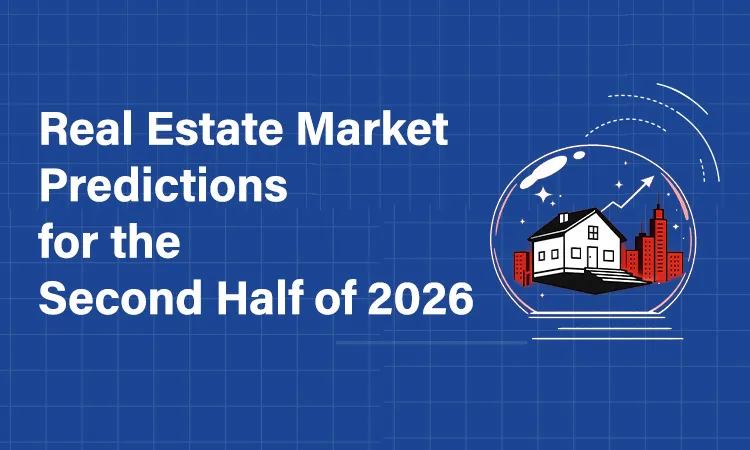
The real estate market is entering a very different phase in 2026. After facing slow transaction activity, rising interest rates, pricing corrections, and global uncertainty over the last two years, the sector is finally showing signs of recovery. Investors, developers, and buyers are once again becoming more active, but the market is no longer moving in a uniform direction.
The second half of 2026 is expected to bring stronger momentum across selected real estate segments, especially in residential, industrial, retail, and infrastructure-linked markets. However, performance will vary significantly depending on location, property type, connectivity, and long-term demand fundamentals.
This means buyers and investors can no longer depend only on broad market trends. Real estate decisions are becoming more localized and strategy-driven.
Table of Contents
- Why The Market Is Entering A Recovery Phase
- Residential Real Estate Will Continue To Stay Strong
- Why Infrastructure-Led Markets Will Perform Better
- Industrial And Logistics Real Estate Will Remain A Major Growth Area
- Commercial Real Estate Will Recover Selectively
- Retail Real Estate Is Showing Better Stability
- Data Centers And Technology-Driven Assets Will Continue Growing
- Why Investors Are Becoming More Selective
- Geopolitical Uncertainty Will Still Affect Markets
- Why Active Asset Management Will Matter More
- Final Thoughts
Why The Market Is Entering A Recovery Phase
One of the biggest reasons behind improving market sentiment is the gradual return of investor confidence. Over the last two years, high borrowing costs and uncertain economic conditions slowed down both residential and commercial real estate activity across many global markets.
Now, financing conditions are slowly improving. Access to debt is becoming easier, transaction activity is increasing, and investors are starting to re-enter the market at more attractive valuations.
Another important factor is the supply slowdown. In many regions, construction costs have increased so much that building new projects has become more expensive than acquiring existing assets. This is reducing fresh supply in several segments, which may support pricing recovery in the coming quarters.
As supply tightens and demand stabilizes, the market is gradually shifting toward a healthier cycle.
Residential Real Estate Will Continue To Stay Strong
Residential real estate is expected to remain one of the strongest-performing segments during the second half of 2026. Demand for properties in real estate continues to rise because buyers are prioritizing lifestyle, comfort, connectivity, and long-term security.
In cities like Gurgaon, Noida, Bangalore, and Hyderabad, premium residential projects are seeing steady traction, especially developments with:
- better layouts,
- lower density,
- strong infrastructure connectivity,
- and integrated lifestyle amenities.
The demand for larger homes is also continuing because hybrid work culture has permanently changed buyer preferences. People now want homes that can support both personal and professional life comfortably.
At the same time, rising land prices and construction costs are likely to keep premium housing prices firm in most high-demand corridors.
Why Infrastructure-Led Markets Will Perform Better
Infrastructure development is expected to become one of the biggest growth drivers for real estate during the second half of 2026.
Regions connected to:
- expressways,
- airports,
- metro corridors,
- industrial zones,
- and logistics hubs
are likely to witness stronger appreciation and investment activity.
Markets like Dwarka Expressway, Yamuna Expressway, Noida Extension, and parts of New Gurgaon are already benefiting from this trend. As connectivity improves further, these areas are expected to attract both end-users and investors looking for future growth potential.
Infrastructure is no longer just supporting real estate growth — it is actively shaping demand patterns.
Industrial And Logistics Real Estate Will Remain A Major Growth Area
Industrial and logistics assets are expected to remain one of the strongest sectors globally and in India.
The shift in global supply chains, growth in manufacturing activity, and expansion of e-commerce continue to drive demand for warehousing and logistics infrastructure. Companies are increasingly looking for strategically connected industrial spaces that support faster distribution and operational efficiency.
In India, industrial corridors connected to highways, freight corridors, and airports are likely to see sustained demand. Areas near logistics hubs and manufacturing zones may continue attracting institutional investment during the second half of 2026.
This segment is becoming increasingly important because modern economies now depend heavily on supply-chain efficiency.
Commercial Real Estate Will Recover Selectively
Commercial office real estate is expected to improve gradually, but recovery will remain uneven.
Premium Grade-A office spaces in strong business districts are still attracting demand because companies want better-quality work environments to encourage employee return-to-office trends. Well-located office projects with strong infrastructure and sustainability features are likely to perform better.
However, weaker office locations and outdated buildings may continue facing pressure. Businesses are becoming more selective about the spaces they occupy, and many companies now prefer flexible office formats instead of traditional long-term leases.
This means office market performance will depend heavily on:
- location quality,
- tenant profile,
- connectivity,
- and asset management standards.
Retail Real Estate Is Showing Better Stability
Retail real estate is also expected to remain stable in the second half of 2026, especially in densely populated urban markets.
High-street retail, mixed-use commercial developments, and entertainment-focused destinations are seeing improving consumer activity. Limited new supply in quality retail spaces is also supporting rental growth in several markets. It is very important that an investor chooses the right location for retail spaces in real estate.
Consumers today prefer experiential retail environments rather than purely transactional shopping spaces. Because of this, projects that combine dining, entertainment, shopping, and social interaction are likely to perform better than traditional retail formats.
Commercial developments connected to large residential catchments are expected to remain particularly attractive.
Data Centers And Technology-Driven Assets Will Continue Growing
One of the fastest-growing real estate segments globally is data center infrastructure. Demand is increasing rapidly because of artificial intelligence expansion, cloud computing, digital services, and technology investment.
Institutional investors continue showing strong interest in this segment because demand remains exceptionally high while quality supply is still limited in many regions.
Technology-linked real estate assets are expected to remain a major investment theme beyond 2026 as digital infrastructure becomes increasingly critical to global economies.
Why Investors Are Becoming More Selective
Even though the market outlook is improving, investors are becoming far more careful than before. Earlier, many buyers invested based purely on launch hype and broad market optimism. Today, investment decisions are much more research-driven.
Investors are now evaluating:
- local demand fundamentals,
- tenant quality,
- infrastructure growth,
- replacement cost,
- future supply levels,
- and long-term usability.
This means the gap between strong projects and weak projects may increase further in the coming years. Well-planned developments in strategic locations are likely to outperform average projects significantly.
Geopolitical Uncertainty Will Still Affect Markets
Despite improving fundamentals, global uncertainty remains an important factor.
Geopolitical tensions, economic policy changes, inflation concerns, and global trade disruptions could still create short-term volatility across markets. However, real estate continues attracting investors because it is often viewed as a relatively stable asset class with long-term value and income potential.
In uncertain economic environments, physical assets linked to strong demand and infrastructure often become more attractive to long-term investors.
Why Active Asset Management Will Matter More
One major trend emerging in 2026 is the growing importance of active asset management.
Earlier, investors could often rely mainly on market appreciation. Today, operational efficiency, tenant retention, maintenance quality, and space utilization are becoming equally important.
This shift is also influencing the debate around investing in stocks vs. real estate, as investors increasingly prefer stable physical assets over short-term market volatility.
Projects that are professionally managed and continuously upgraded are likely to perform much better over time. Investors are paying closer attention to how properties operate after completion, not just during launch stages.
Final Thoughts
The second half of 2026 is expected to mark an important transition period for real estate markets. Recovery is becoming more visible across residential, industrial, retail, and infrastructure-linked segments, but growth will not happen equally everywhere.
Location quality, infrastructure connectivity, supply conditions, and long-term demand fundamentals will play a much bigger role in determining success. Buyers and investors who focus on practical usability, future growth corridors, and strong asset quality are likely to benefit the most.
Real estate is no longer moving through a simple boom cycle. The market is becoming more mature, selective, and strategy-driven. And in all probability, that shift will continue shaping investment decisions well beyond 2026.
Our Latest Blogs


Related Blogs
Top 5 Cities with the Highest Real Estate ROI in 2026
The Indian real estate market is changing rapidly in 2026. Earlier, investors mainly focused on...
Read more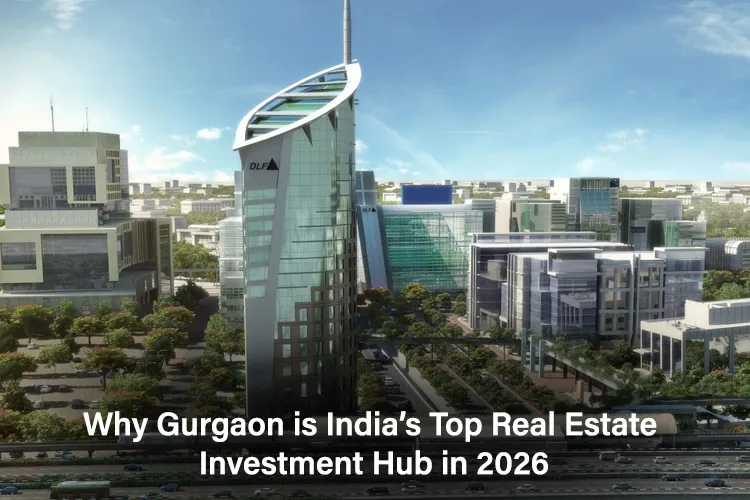
Why Gurgaon is India’s Top Real Estate Investment Hub in 2026
There’s a reason every conversation about property that is serious in 2026 eventually stops on...
Read more
Real Estate Market Trends to Watch This Year
The sector of real estate is moving through one of its most transformative phases. Changing...
Read more
What Drives Demand in Today’s Residential Real Estate Market
It’s never a single factor that decides the growth in real estate in Gurgaon. It...
Read more
How to Spot a High-Growth Real Estate Project Before Everyone Else
Investing in real estate is often about timing. The biggest gains are usually made by...
Read more
Why Pre-Launch Bookings Are the Smartest Real Estate Move Right Now
The Indian real estate market is moving differently in 2026. Buyers are no longer waiting...
Read more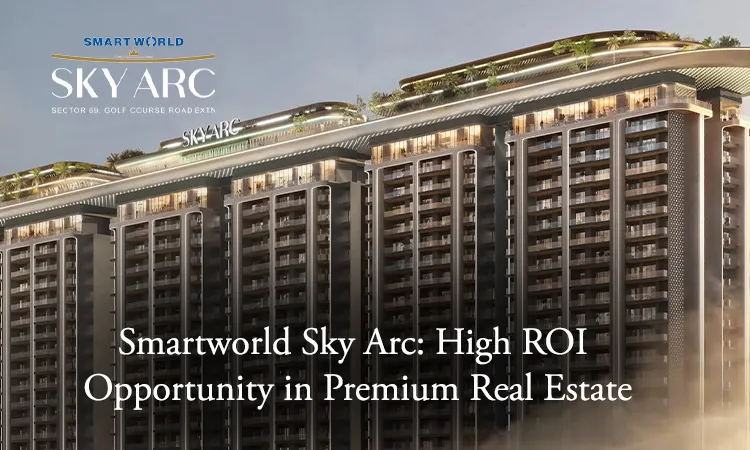
Smartworld Sky Arc: High ROI Opportunity in Premium Real Estate
There’s a pattern most investors ignore: by the time a location feels “safe,” most of...
Read more
Tax Benefits of Investing in Real Estate
Taxes feel like a leak that is quite constant in your income. Imagine this: you...
Read more