The commercial real estate market is evolving rapidly. Earlier, developers mainly focused on constructing retail shops or office spaces in high-traffic locations and expected demand to follow automatically. Today, the market works very differently. Buyers, investors, and businesses are far more selective about where they invest and operate.
A successful commercial project is no longer defined only by construction size or launch hype. Its long-term success depends on multiple factors such as location, connectivity, tenant demand, planning, infrastructure, flexibility, and overall usability.
Some projects reflect how modern commercial developments are being designed around changing business needs and investment expectations. The focus today is not just on creating spaces but on building destinations that remain active, profitable, and relevant over time.
Table of Contents
- Why Location Still Remains The Biggest Factor
- The Importance of Mixed-Use Development
- Why Connectivity Directly Impacts Commercial Success
- How Design And Planning Influence Business Growth
- Why Flexibility Is Becoming More Important
- The Role Of Branding And Marketing
- Why Tenant Retention Matters More Than Initial Sales
- How Infrastructure Growth Creates Long-Term Value
- Why Investor Confidence Depends On Practical Usability
- Final Thoughts
Why Location Still Remains The Biggest Factor
No matter how modern a commercial project looks, location continues to be the strongest factor behind its success. Businesses always prefer areas with strong connectivity, good visibility, and consistent footfall because these directly affect customer reach and operational convenience. That is why it is very important to choose the right location for retail spaces in a practical way.
Commercial developments located near highways, business corridors, residential catchments, and transport infrastructure usually perform better over the long term. This is one of the reasons why the Yamuna Expressway is gaining attention among investors and businesses alike.
The corridor is witnessing rapid infrastructure growth with improving road connectivity, educational institutions, industrial expansion, and upcoming developments linked to Greater Noida and Noida International Airport. Projects positioned along such growth corridors naturally gain stronger future potential.
For commercial real estate, accessibility is not just an advantage anymore; it is a necessity.
The Importance of Mixed-Use Development
One of the biggest changes in commercial real estate is the rise of mixed-use projects. Pure office or pure retail formats are slowly becoming less attractive compared to developments that combine multiple functions within one ecosystem.
Modern buyers and businesses prefer projects that include retail spaces, office zones, food courts, studio apartments, and entertainment areas together. This creates continuous activity throughout the day and increases overall commercial viability.
Projects like M3M Atrium benefit from this approach because they are designed to attract different categories of users instead of depending on a single business segment. A project that serves professionals, shoppers, entrepreneurs, and visitors together naturally generates stronger movement and better occupancy levels.
This balance also reduces risk for investors because demand remains diversified.
Why Connectivity Directly Impacts Commercial Success
Connectivity has become one of the biggest drivers of commercial growth in NCR. Businesses today prefer locations where customers, employees, and investors can easily reach them without major travel difficulties.
The Yamuna Expressway has emerged as a strong commercial corridor because it connects multiple high-growth zones across the NCR. Improved infrastructure development in this region is creating new opportunities for retail, office, hospitality, and commercial investment. It is very important to know the latest commercial property loan rates.
Projects located near expressways, metro connectivity, airports, and dense residential sectors generally attract more businesses because accessibility improves customer movement and operational efficiency.
Commercial real estate performs best where infrastructure growth supports long-term economic activity.
How Design And Planning Influence Business Growth
A successful commercial project is not only about selling units. It is also about creating an environment where businesses can function efficiently.
Poor planning often leads to issues like the following:
- congested circulation areas,
- inadequate parking,
- weak pedestrian movement,
- and poor visibility for shops.
These factors directly affect business performance.
Modern commercial developments focus more on layout efficiency, movement planning, frontage visibility, and customer convenience. Wide corridors, organized zoning, easy navigation, and proper traffic management all contribute to a better visitor experience.
When customers spend more time comfortably inside a project, businesses naturally benefit.
Why Flexibility Is Becoming More Important
Business needs are changing faster than before. Startups, freelancers, small enterprises, and growing brands all require different types of commercial spaces. Projects that offer flexibility tend to perform better because they attract a wider tenant base.
Flexible office layouts, compact studio formats, customizable retail spaces, and co-working concepts are becoming increasingly important in commercial developments.
For example, studio apartments and compact business suites appeal strongly to working professionals and entrepreneurs who want convenience and accessibility within the same ecosystem.
This flexibility allows commercial projects to adapt to changing market trends instead of becoming outdated quickly.
The Role Of Branding And Marketing
Even a well-located commercial project can struggle if it fails to position itself correctly in the market. Branding plays a major role in attracting investors, businesses, and customers.
Successful projects clearly communicate:
- location advantages,
- investment potential,
- infrastructure growth,
- target audience,
- and long-term commercial viability.
Marketing is no longer just about advertisements. Buyers today conduct detailed research before investing. They compare projects, evaluate future growth potential, and study surrounding developments carefully.
Projects that maintain strong visibility and market presence usually build better investor confidence.
Why Tenant Retention Matters More Than Initial Sales
Many commercial projects perform well during launch but struggle later because businesses fail to sustain operations within them.
A truly successful commercial project is one that maintains the following:
- healthy occupancy,
- stable business activity,
- and long-term tenant retention.
This depends heavily on property management and operational quality. Well-maintained common areas, proper security, cleanliness, maintenance support, and organized facility management all influence how businesses perceive the project.
If tenants are satisfied, vacancy rates remain lower, and investor confidence increases over time.
Commercial success is not built only during launch. It depends on long-term operational performance.
How Infrastructure Growth Creates Long-Term Value
One major reason investors are shifting toward emerging corridors like the Yamuna Expressway is future infrastructure development.
Large-scale infrastructure projects often create new economic activity, improve connectivity, and increase surrounding property demand. As commercial movement grows in these regions, projects positioned early in the growth cycle benefit significantly.
The presence of upcoming business zones, educational hubs, industrial activity, and airport-led development creates long-term commercial opportunities.
Investors today are not only buying based on current conditions. They are investing based on future growth potential.
Why Investor Confidence Depends On Practical Usability
Commercial real estate buyers have become more practical in recent years. Instead of focusing only on launch pricing or marketing promises, investors now evaluate whether a project can realistically sustain business activity.
There are some factors that really influence the property prices in real estate, like-
- footfall potential,
- accessibility,
- tenant demand,
- parking availability,
- the surrounding catchment population
All influence the long-term performance of a commercial development.
Projects that balance investment potential with practical usability usually perform much better over time.
Final Thoughts
A successful commercial project is built on much more than construction alone. Location, connectivity, planning, flexibility, infrastructure growth, tenant retention, and long-term usability all work together to determine commercial success.
Developments like Migsun Nehru Place 1 highlight how modern commercial projects are evolving to match changing business and investment needs. Instead of focusing only on selling space, the emphasis is now on creating integrated commercial environments that remain active and profitable for years.
As NCR continues expanding and infrastructure improves across emerging corridors like the Yamuna Expressway, commercial projects that combine strong planning with future-ready positioning are likely to see the strongest long-term growth.
Our Latest Blogs


Related Blogs
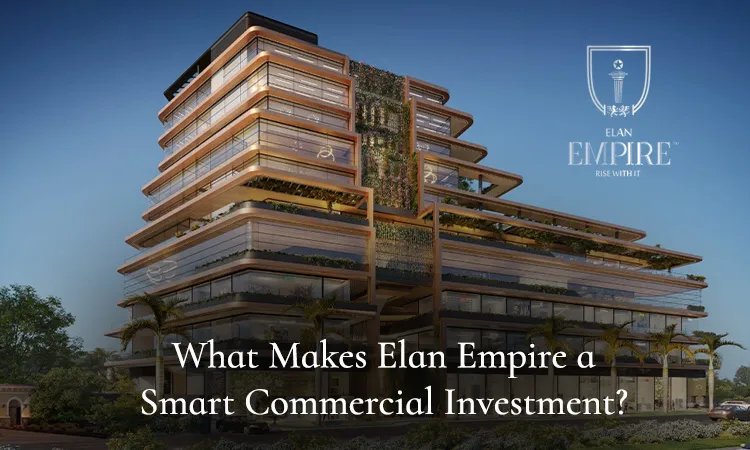
What Makes Elan Empire a Smart Commercial Investment
Commercial real estate in Gurgaon has changed a lot over the last few years. Instead...
Read more
What Makes DLF Crest a Landmark Residential Project
In Gurgaon’s constantly evolving luxury housing market, only a few developments earn the tag of...
Read more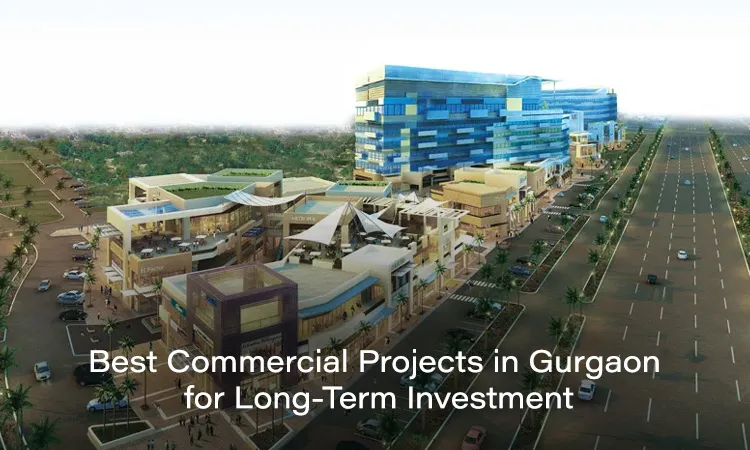
Best Commercial Projects in Gurgaon for Long-Term Investment
Gurgaon continues to remain one of the most attractive real estate markets in India, driven...
Read more
What Makes DLF Park Place a Preferred Choice for Families
When it comes to premium residential addresses in Gurgaon, few names carry the same reputation...
Read more
What Makes Elan Miracle Attractive for Modern Businesses?
Commercial real estate in Gurgaon has changed dramatically over the last few years. Businesses are...
Read more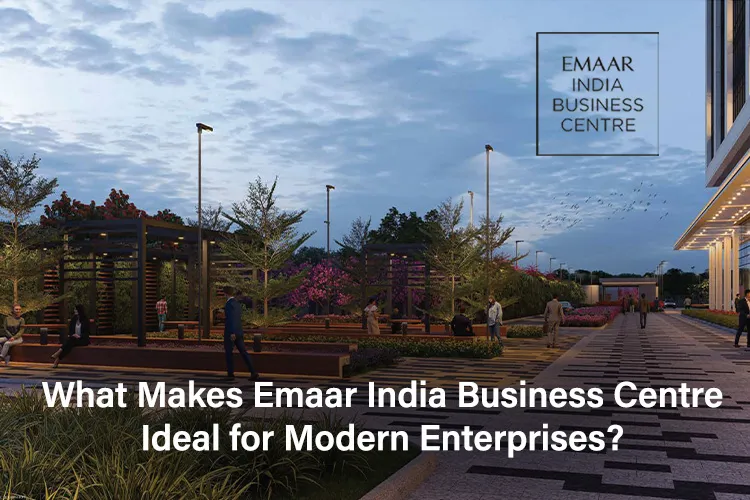
What Makes Emaar India Business Centre Ideal for Modern Enterprises?
The conversation around office spaces has changed. Companies are no longer just looking for square...
Read more
What Makes Emaar Amaris a Truly Comfortable Place to Live
When people talk about luxury homes in Gurgaon, they usually mention big sizes, tall towers,...
Read more
What Makes Birla Arika a High-Potential Real Estate Investment
Gurgaon’s luxury real estate market has matured very sharply in recent times. Buyers in today’s...
Read more