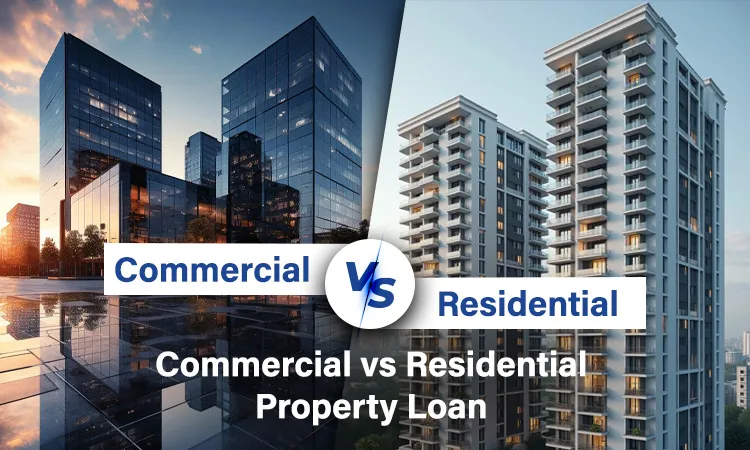
A property is often considered one of the most valuable assets a person owns. Beyond providing security and stability, it can also help fulfil important financial requirements through a Loan Against Property (LAP). Whether it is funding a business expansion, managing personal expenses, supporting higher education, or handling unexpected financial needs, a LAP allows property owners to unlock the value of their asset without selling it.
However, one decision plays a crucial role in determining the structure of the loan—the type of property being offered as collateral. Many borrowers focus mainly on interest rates, loan amounts, or approval timelines but overlook the difference between a residential property loan and a commercial property loan.
Although both options fall under Loan Against Property, they are evaluated differently by lenders. The purpose of borrowing, property type, repayment capacity, and risk assessment all influence the final loan terms. Understanding these differences can help borrowers choose a financing option that aligns better with their financial goals.
Table of Contents
- The Purpose Behind the Loan Defines the Right Choice
- Why Lenders View Residential and Commercial Properties Differently
- Loan Approval Depends on More Than Just Property Value
- Important Factors to Consider Before Selecting a Property Loan
- The Importance of Looking Beyond Interest Rates
- Common Mistakes Borrowers Should Avoid When Choosing a Property Loan
- Why Comparing Loan Options Before Applying Makes a Difference
- Final Thoughts
The Purpose Behind the Loan Defines the Right Choice
The biggest difference between residential and commercial property loans lies in how the funds are intended to be used. A residential property loan is generally secured against a house or residential unit and is commonly preferred by individuals looking to meet personal financial requirements. These may include renovating an existing home, funding education, managing medical expenses, or fulfilling other personal commitments.
Residential properties are primarily associated with personal use, and lenders usually assess them based on factors such as property value, ownership clarity, and the borrower’s income stability. Salaried individuals and self-employed professionals often consider this option when they need access to funds while retaining ownership of their property.
On the other hand, a commercial property loan is secured against business-related properties such as offices, retail shops, warehouses, or other commercial spaces. These loans are generally used by entrepreneurs and business owners for requirements such as business expansion, purchasing inventory, improving working capital, or managing operational expenses.
While both loan types provide financial flexibility, the purpose behind borrowing plays an important role in determining which option is more suitable. A borrower looking to manage personal financial needs may find a residential property loan more appropriate, whereas someone seeking funds for business growth may benefit from a commercial property loan.
Why Lenders View Residential and Commercial Properties Differently
From a lender’s perspective, every property carries a different level of risk. This difference in risk assessment is one of the main reasons why residential and commercial property loans have different terms and conditions.
Residential properties generally have stable demand because housing remains a basic requirement. This stability often allows lenders to provide comparatively lower interest rates, longer repayment tenures, and higher loan-to-value ratios. Since residential properties usually have a wider buyer market, lenders consider them relatively easier to liquidate if required. People should also know the art of spotting a high potential real estate project before anybody else.
Commercial properties, however, are closely connected with market conditions and business performance. The value and demand of a commercial space can be influenced by factors such as location trends, business activity, vacancy levels, and economic conditions. Because of these uncertainties, lenders may consider commercial property loans to carry a higher level of risk.
As a result, commercial property loans generally come with shorter repayment periods, comparatively higher interest rates, and lower loan-to-value ratios. These differences are not because one property type is better than the other, but because lenders evaluate the stability and risk associated with each asset differently.
Loan Approval Depends on More Than Just Property Value
Owning a valuable property does not automatically guarantee loan approval. Lenders also evaluate the financial profile of the borrower before approving a Loan Against Property. Factors such as income stability, repayment capacity, credit history, and existing financial obligations play an important role in determining eligibility.
For salaried applicants, lenders usually focus on monthly income, employment stability, and regular repayment ability. A consistent income source provides lenders with confidence regarding timely EMI payments.
For self-employed individuals and business owners, the assessment process may involve a closer look at business performance, cash flow, profitability, and financial records. Since commercial loans are often connected with business activities, lenders carefully analyse whether the borrower has sufficient and stable income to manage repayments.
This makes it important for borrowers to evaluate their own financial position before selecting a loan. The right loan is not only about getting access to funds but also about ensuring comfortable repayment over the entire tenure.
Important Factors to Consider Before Selecting a Property Loan
Choosing between a commercial and residential property loan requires careful evaluation. Borrowers should consider their immediate requirements as well as their long-term financial commitments before making a decision.
Some important factors to consider include:
- Purpose of borrowing: Understand whether the funds are required for personal needs or business-related expenses, as this directly influences the suitable loan option.
- Repayment capacity: Assess monthly income, existing obligations, and future financial plans to ensure that repayments remain manageable.
- Loan tenure and overall cost: A longer tenure may reduce monthly EMI pressure but can increase the total interest paid over time.
- Property value and eligibility: The market value, legal status, and category of the property influence loan approval and the amount that can be borrowed.
Making a decision after evaluating these factors helps borrowers select a loan structure that supports their financial objectives instead of creating unnecessary pressure.
The Importance of Looking Beyond Interest Rates
Interest rates are an important factor when selecting a loan, but they should not be the only deciding factor. A loan with a slightly lower interest rate may not always be the most beneficial option if it comes with limited flexibility or higher associated charges. The discussion around home financing is much like the question whether cash buyer vs. home loan: which strategy wins in 2026?, the right choice depends on your financial goals, repayment capacity and long-term plans.
Borrowers should consider the complete cost of borrowing, including processing fees, documentation charges, repayment terms, and other applicable costs. Understanding the complete loan structure provides a clearer picture of the financial commitment involved.
Another important consideration is the repayment flexibility offered by the lender. Features such as prepayment options, foreclosure terms, and customer support can significantly impact the overall borrowing experience.
A well-informed borrower looks beyond the initial offer and evaluates whether the loan remains suitable throughout the repayment journey.
Common Mistakes Borrowers Should Avoid When Choosing a Property Loan
Selecting a property loan requires careful planning, as mistakes during the decision-making process can increase financial burden in the future. Many borrowers focus only on immediate requirements and overlook important factors that affect the overall cost of borrowing.
Common mistakes include:
- Choosing only based on interest rates: A lower rate does not always mean a better deal if other charges or conditions increase the overall cost.
- Ignoring loan tenure impact: A longer repayment period may reduce EMI but can significantly increase total interest payments.
- Not checking eligibility requirements: Understanding lender criteria beforehand can reduce the chances of application rejection.
- Failing to compare lenders: Different lenders may offer different terms, making comparison important before making a final decision.
Avoiding these mistakes allows borrowers to approach the loan process with better clarity and confidence.
Why Comparing Loan Options Before Applying Makes a Difference
Every borrower has different financial requirements, and the most suitable loan depends on individual circumstances. Comparing different loan options helps identify the one that provides the right balance between affordability, flexibility, and convenience.
Borrowers should evaluate factors such as loan terms, processing timelines, service quality, repayment flexibility, and overall borrowing costs before making a decision. People should also evaluate things like commercial property loan interest rates before taking a decision.
A reliable lending partner can make the entire loan journey smoother by offering transparent processes and suitable financial solutions. Taking time to research options before applying can help borrowers avoid unnecessary costs and choose a loan that supports their long-term objectives.
Final Thoughts
A commercial and residential property loan both provide an opportunity to access funds by leveraging property value, but they serve different financial purposes. While residential property loans are generally suitable for personal requirements, commercial property loans are designed around business-related needs.
The right choice depends on factors such as borrowing purpose, income stability, repayment ability, and long-term financial goals. Instead of focusing only on loan amount or interest rates, borrowers should consider the complete financial picture before making a decision.
A carefully selected Loan Against Property can become a valuable financial tool, helping individuals and businesses achieve their goals while maintaining financial stability.
Our Latest Blogs


Related Blogs

What is Commercial Property Loan Interest Rates in India?
Doesn't this happen to you? You pass by a very buzzing office building, a very...
Read more
Leasehold vs Freehold Property: Which One Should You Choose?
Buying a house is often considered one of the biggest financial decisions a person makes....
Read more
REITs vs Direct Property Investment: Which Offers Better Returns
There is a moment every investor reaches where the spreadsheets stop helping.One option promises flexibility,...
Read more
How New Infrastructure is Driving Property Values Up
There was a time when buyers mainly looked at the size of the property, the...
Read more
How to Identify High-Return Property Investments
If you have ever wondered why some people make serious money in real estate while...
Read more
NRI's Guide to Buying Property in Gurgaon
Gurgaon has quietly moved from being just another NCR extension to becoming one of the...
Read more
Impact of Metro Expansion and Infrastructure on Gurgaon Property Prices
If you’ve lived in Gurgaon long enough, you already know one thing. This city moves...
Read more
Top Emerging Sectors in Gurgaon for Property Investment
The real estate market in Gurgaon is no longer just about luxury addresses that are...
Read more