In the last ten years, the real estate industry has seen so many things change. And the only thing that is at the centre of it is advanced technology. From how homes are designed and constructed to how buyers search, evaluate, and purchase properties, digital tools are reshaping every stage of the journey related to housing. What once required site visits endlessly, paperwork in the physical sense, and guesswork has now become more driven by data, efficient, and transparent.
Today’s homes are not just structures made of concrete; they are smarter, more likely to last in the future, and more aligned with lifestyles that are quite modern. At the same time, the way developers and companies in the real estate market sell properties has evolved with virtual platforms, artificial intelligence, and automation. Let us now explore how technology is changing the way homes are built and sold, and what this means for buyers, developers, and investors in the coming years.
Table of Contents
- Designing Homes with Advanced Technology
- Virtual Reality and Augmented Reality in Real Estate
- Smart Construction and Automation
- Rise of Smart Homes and IoT Integration
- Sustainable Technology in Construction
- Digital Marketing and Online Property Platforms
- Technology-Driven Sales and Transactions
- Data Analytics and Market Insights
- Changing Buyer Expectations
- The Future of Technology in Real Estate
- Conclusion
Designing Homes with Advanced Technology
Let’s look at the rock bottom first. The transformation begins at the stage of design. Earlier, architects relied heavily on 2D drawings and models that were extremely physical. This often made it difficult for buyers and stakeholders to visualize the final product. Today, advanced software tools, that are advanced such as Building Information Modelling (BIM), 3D visualization, and digital twin technology, allow developers to design projects. And these projects have a lot of precision and quality.
These tools enable architects and engineers to detect issues in design early, reduce errors in construction, and improve how different teams collaborate. Developers can also simulate scenarios that happen in real life, such as sunlight exposure, ventilation, and efficiency, before construction even begins. As a result, the planning phase has become more accurate and cost-effective.
For buyers, this technology offers experiences that are immersive. Walkthroughs that are virtual and 3D renders help them understand layouts, designs related to interior designs, and overall aesthetics of the project, long before the people are done with the property.
Virtual Reality and Augmented Reality in Real Estate
One of the biggest changes in how homes are sold is the rise of Virtual Reality (VR) and Augmented Reality (AR). These technologies allow people who are likely to buy a house, especially for the first time, to explore properties remotely without visiting the site in person. With VR headsets or even smartphones, buyers can walk through rooms, examine finishes, and visualize what their house in the future is going to look like.
AR takes the experience a step further by allowing users to overlay furniture, décor, or design changes onto real spaces. This helps buyers personalize their homes during the early stages of construction.
For developers and teams who are into sales, VR and AR reduce the dependency on flats that are just samples and make it easier to reach people all across the world. And guess what? This is true specially non-resident buyers who may not be able to visit the project in person.
Smart Construction and Automation
Technology has also transformed how homes are built. Construction companies are increasingly adopting robotics, drones, and AI-driven analytics to improve efficiency and safety on-site. Drones are used for land surveys, progress monitoring, and site inspections, significantly reducing manual work and improving accuracy.
Prefabrication and modular construction techniques allow certain components of a building to be manufactured off-site and assembled quickly on location. This reduces construction timelines and minimizes material wastage. Additionally, automation tools help monitor worker safety, track inventory, and optimize resource allocation.
Artificial intelligence is also being used to predict potential delays, estimate costs, and improve project management. By analyzing historical data, AI can help developers make informed decisions and avoid costly mistakes.
Rise of Smart Homes and IoT Integration
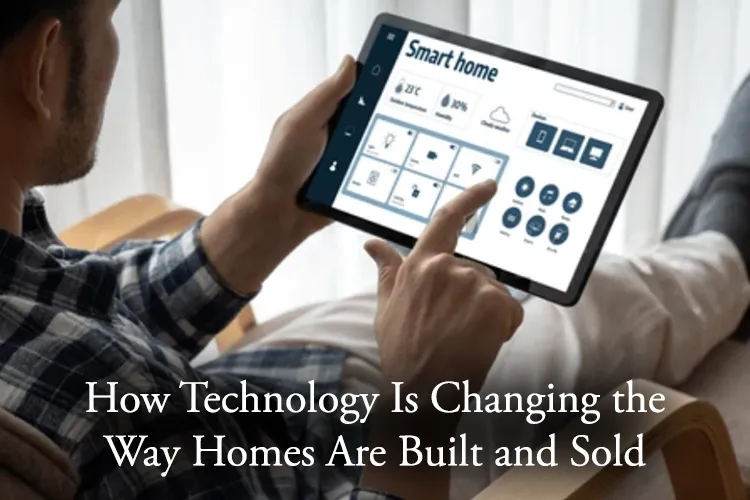
Modern homes are becoming increasingly intelligent thanks to the Internet of Things (IoT). Smart homes integrate connected devices that allow residents to control lighting, temperature, security systems, and appliances through smartphones or voice commands.
These features not only enhance convenience but also improve energy efficiency. Smart thermostats, automated lighting systems, and sensor-based appliances reduce energy consumption and lower utility bills. For people who have a house, this means a greater level of comfort. And people who are planning to take a house, must look at these amenities even before getting the occupancy certificate.
Developers are now integrating smart home features as offerings that are very standard, rather than just luxury stuff. As technology becomes more affordable, smart living is no longer limited to high-end projects and is gradually becoming a mainstream expectation.
Sustainable Technology in Construction
Sustainability has become a major focus in modern housing, and technology plays a crucial role in achieving environmentally responsible development. Builders are using materials that are extremely energy efficient, solar power systems, rainwater harvesting solutions, and waste management technologies to reduce the environmental footprint of residential projects.
Advanced software tools help calculate carbon emissions and energy usage, enabling developers to design greener buildings. Smart monitoring systems allow homeowners to track their water and electricity consumption in real time, encouraging more responsible living habits.
Green construction techniques not only benefit the environment but also enhance long-term property value. As awareness about climate change grows, eco-friendly homes are becoming more attractive to buyers and investors.
Digital Marketing and Online Property Platforms
The way homes are marketed has changed dramatically with the rise of online platforms and digital advertising. Instead of relying solely on newspaper ads or physical brochures, developers now use social media campaigns, targeted online ads, and interactive websites to reach potential buyers.
Property portals and real estate apps allow users to browse listings, compare prices, explore neighborhoods, and schedule virtual tours from the comfort of their homes. High-quality videos, drone footage, and immersive digital content make property marketing more engaging and informative.
Artificial intelligence also plays a role in marketing by analyzing user behavior and recommending properties based on individual preferences. This personalized approach improves the chances of converting potential leads into buyers.
Technology-Driven Sales and Transactions
The home-buying process has become faster and more transparent thanks to digital tools. Online booking systems, e-signatures, and digital documentation have reduced paperwork and simplified transactions. Buyers can now reserve units, make payments, and track construction progress online.
Blockchain technology is also being explored to improve transparency in property transactions. By maintaining secure and tamper-proof records, blockchain can reduce fraud and ensure clear ownership histories.
Virtual sales galleries and cloud-based platforms allow buyers to access floor plans, payment schedules, and legal documents easily. This level of accessibility empowers buyers to make informed decisions without unnecessary delays.
Data Analytics and Market Insights
Technology has made real estate more data-driven than ever before. Developers and investors now rely on analytics tools to study market trends, demand patterns, and pricing strategies. Data collected from online searches, social media activity, and buyer preferences, and property rates in a city like Gurgaon, for example, helps companies understand consumer behavior and create better products.
Predictive analytics also allows developers to identify emerging hotspots and plan projects in areas with high growth potential. For buyers, access to market data means more transparency and better investment decisions.
Changing Buyer Expectations
As technology becomes an integral part of daily life, buyer expectations have evolved. Today’s homebuyers are more informed and tech-savvy. They expect seamless digital experiences, smart home features, and eco-friendly living spaces.
Millennials and younger buyers, in particular, prioritize convenience, sustainability, and connectivity. Developers who embrace technology are better positioned to meet these expectations and stay competitive in a rapidly evolving market.
The Future of Technology in Real Estate
Looking ahead, technology will continue to reshape the housing industry. Artificial intelligence, machine learning, and automation will further streamline construction and sales processes. The concept of digital twins - virtual replicas of physical buildings - may become more common, allowing real-time monitoring and maintenance.
Cities that are very smart, infrastructure that is autonomous, and materials used for building that are very advanced will also influence how homes are designed and developed. Gurgaon sees newer growth in innovation and infrastructure; the line between technology and real estate will continue to fade all the sooner.
However, experts emphasize that technology should not be used merely as a marketing gimmick. Its true value lies in enhancing sustainability, improving efficiency, and creating better living experiences for residents.
Conclusion
Technology is literally changing how homes are built and sold. From tools for designing that are extremely advanced, and construction techniques that are set to virtual tours and digital transactions, every aspect of the real estate journey is becoming more efficient, easy to review and focused on the customers.
If you are a buyer, then this is a great thing for you. This means greater convenience, standards for living that are high, and more people taking decisions in a more informed way. For developers, technology offers opportunities to innovate, reduce costs, and meet evolving market demands. As the industry continues to evolve, the integration of smart technology and sustainable practices will define the future of housing.
Ultimately, the goal is not just to build smarter homes but to create living spaces that reflect the needs, values, and lifestyles of modern homeowners. With the right balance of innovation and practicality, technology has the potential to redefine the way we experience real estate for generations to come.
Our Latest Blogs


Related Blogs

Exploring the CTMA3 Air Purification Technology in Blissville Homes
Let’s get one thing straight. In the real estate market of today, things are not...
Read more
What Does Carpet Area vs. Built-Up vs. Super Built-Up Area Really Mean?
One of the most common sources of confusion for homebuyers in India is understanding how...
Read more
Why BPTP Downtown 66 Feels Built for the Next Gurgaon
Gurgaon is no longer growing in the old way. Earlier, luxury real estate was mostly...
Read more
Smart Homes and PropTech Adoption in Gurgaon Projects
If you’ve been tracking real estate trends in Gurgaon lately, you’ve probably noticed one thing....
Read more
Sophisticated Homes at Puri Diplomatic Residences
Luxury in the context of the present day is no longer defined only by interiors...
Read more
Understanding Floor Plans and Space Utilization in Homes
When you look at a home layout for the very first time, it can feel...
Read more
A Detailed Overview of Homes, Planning, and Lifestyle at AIPL Riviera
There’s one particular thing to be noted about the homebuyers in Gurgaon. In today’s time,...
Read more
Leasehold vs Freehold Property: Which One Should You Choose?
Buying a house is often considered one of the biggest financial decisions a person makes....
Read more